
Transitional Authors 5: Emmet Gowin
Bio
Born in 1941 in Danville, Virginia, Emmet Gowin grew up in a Methodist and Quaker household that valued quiet observation. Early years spent sketching marsh life and woodland scenes taught him patient attention to the natural world.
After studying graphic design at Richmond Professional Institute, he pursued an MFA in photography at Rhode Island School of Design, where he worked under Harry Callahan and Aaron Siskind — masters who recognized the authenticity in his emerging vision.
In 1964, Gowin married Edith Morris, a woman from his hometown whose extended Virginia family became his first profound photographic subject. These intimate domestic portraits, established his early reputation in the 1970s. The images feel simultaneously formal and transgressive, capturing what Gowin called attention to "the body and personality that had agreed out of love to reveal itself."
The 1980 eruption of Mount St. Helens pulled Gowin skyward and outward. For the next two decades, he made aerial photographs of humanity's mark on the landscape — from nuclear test sites to industrial agriculture — seeking what one writer described as "the beauty of our losses."
A 1997 trip to Ecuador's rainforests to photograph moths and insects marked another shift, connecting his intimate family work to ecological awareness.
Gowin taught at Princeton University from 1973 until his retirement in 2009, positioning himself always as a fellow student rather than master.
His archive, acquired by Princeton University Art Museum in 2024, continues to grow as he works from Pennsylvania with Edith, his collaborator of six decades.
Photography style
Emmet and Edith Gowin - a conversation part 1
Gowin's artistic nude period came early in a long career increasingly focused on nature and environmental interconnection. His everyday domestic images sought moments where intimacy transcends into something exceptional and universal.
He started using a 4×5 view camera, with which he made even double expositions but also a heavy vignetting obtained with those view cameras when the bellow is excessively extended, something that a more commercial photographer would have discarded as a mistake but he instead embraced it so much that afterwards he cut circular masks out of cardboard to allow him to have the same effect even with different bellow extensions.
Both photographer and subject lock eyes through the camera, creating an unusual charge of mutual regard. More intimate and transgressive – but always natural – moments in a couple life were portrayed giving these images a more admiring and carnal vibe than the austere and serene beauty of Callahan’s art nude work.
Conclusions
First: one or two generations younger than his teacher, Gowin had to undergo a complete art school formation to reach teaching positions in the USA universities a pretty difference from Callahan’s career.
Photography in the ’60s and ‘70s had become a more institutional art subjects than in the ‘40s and maybe a total self-taught photographer couldn’t achieve the heights our man obtained.
Emmet and Edith Gowin in: a conversation part 2
Second: maybe what follows is a perspective error due to the two photographers that had a similar life, career and art nude experience, but it comes to my mind the huge amount of “art nude photography” coming from our contemporaries and they seem to be so utterly un-useful, a waste of pixel and gears.
Just put your model in a sexy nun costume, make her spread her legs with a defying stare, or put her against the wall and squarely shoot her offering her back side to obtain… what exactly?
The excuse that it is not a medical recommendation to practice a Photography gear to reach some kind of artistic stature, while you can always shoot only for yourself, for hobby – in this exact moment – rings empty to me.
Ok, maybe I have this impression because I share with Gowin the love for Nature and I see like him the link between Nature with Women’s Beauty, there’s that though I know that there are other – equally – legit approaches to Beauty, even if more toxic, darker. The fact that they are not my personal cup of tea does not mean that they don’t have an artistic value.
Third: we stand still in this valley of tears, in full nativity winter, with a dysfunctional economy that tends to disfavor the younglings and those who have to start a career in any sector and in this habitat, couples have a short life expectance.
Yet again. Yet for the last time: it lasts, pristine as a distant dream made sometime before, who knows when and where, it could be possible to tell a Photography Tale of the Love between a woman and a man.
Writing today in this beginning 2026 has the taste of some revolutionary, underground, politic movement.
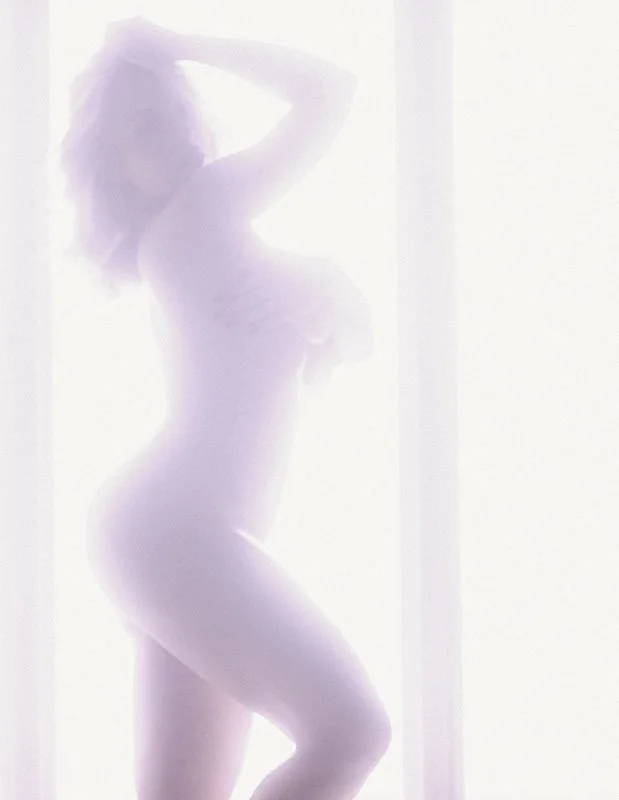
DYI filtering Lorih Caradonna; ph: Francesco Coppola (published image on Style Cruze magazine chapter 152)
Once, so long ago, so clear: it was oh so easier. But we don’t live in the ‘70s anymore, artist too have to come to terms with such an awareness.
Shine on!