
Twilight of artistic nude photography genre: Sally Mann — The Eye That Stays Home
Biography
Sally Mann - At Twelve, Portraits of Young Women from VISUAL UNIVERSE YouTube channel
Sally Mann was born Sally Turner Munger on May 1, 1951, in Lexington, Virginia, a small town in the Shenandoah Valley to which she has remained anchored her entire life. Her father, Robert Munger, was a general practitioner with a passion for photography — it was his 5x7 camera that first introduced young Sally to the medium, planting a seed that would grow into one of the most singular careers in American art. Her mother, Elizabeth, ran the bookstore at Washington and Lee University, though by Mann's own account it was not her mother but Virginia Carter — an African American caretaker the family called "Gee-Gee" — who was the true maternal presence of her childhood. Carter, born in 1894, raised Mann and her two brothers with extraordinary dignity and resilience, and her figure would resurface decades later as a central subject of Mann's meditation on race, memory, and the American South.
Mann attended The Putney School in Vermont, graduating in 1969 — she has admitted with characteristic candor that her initial motivation for taking up photography there was simply to spend time alone in the darkroom with a boyfriend. Afterwards, she went on to study at Bennington College and Friends World College before earning a BA summa cum laude from Hollins College in 1974, followed by an MA in creative writing in 1975. She has never had formal training in photography, and proudly declares that she never reads about it either.
In 1969 she met Larry Mann, whom she married in 1970. He would become her attorney, her subject, and her life companion — the two built their home on Sally's family farm in Lexington, where they raised three children: Emmett (1979), Jessie (1981), and Virginia (1985). Larry was diagnosed with muscular dystrophy around 1996, a condition that would later become the subject of one of Sally's most intimate bodies of work. Emmett, the eldest, died by suicide in 2016 following a life-threatening car accident and a subsequent battle with schizophrenia — a grief that quietly shadows Mann's later years. Jessie became an artist; Virginia, a lawyer.
Beyond photography, Mann is passionate about endurance horse racing. In 2006 a riding accident left her with a broken back after her Arabian horse died beneath her mid-ride; two years of recovery followed, during which she produced a remarkable series of ambrotype self-portraits.
Career
Blood Ties. The Life and Work of Sally Mann. 1994 from Art&photo YouTube channel
Mann's first solo exhibition was held in 1977 at the Corcoran Gallery of Art in Washington, DC — she was twenty-six years old. The show presented The Lewis Law Portfolio, a series of black-and-white photographs documenting the construction of a new law school building at Washington and Lee University. Some images carried an already distinctive surreal quality; they were later included in her first book, Second Sight (1983).
Her artistic voice sharpened considerably with At Twelve: Portraits of Young Women (Aperture, 1988), a study of adolescent girls navigating the uneasy threshold between childhood and womanhood. Shot in their everyday domestic environments, with the girls' eyes consistently meeting the camera, the series was as much a social document of Virginia's class landscape as it was a meditation on identity and vulnerability. It established the emotional register — unflinching, tender, slightly ominous — that would define all her subsequent work.
Then came Immediate Family (1992), the body of work that brought Mann to international prominence. Over nearly a decade, from 1985 to 1994, she photographed her three children — Emmett, Jessie, and Virginia — at the family's remote summer cabin in the Shenandoah Valley, using a large-format 8x10 view camera. The images move fluidly between the spontaneous and the carefully staged, between sunlit innocence and something darker and more complex. Time magazine, naming her America's Best Photographer in 2001, described the series as recording childhood "with naked candor and the fervor of maternal curiosity and care" — no other collection of family photographs, they wrote, was remotely like it.
As her children grew into adolescence, Mann's lens shifted toward the landscape itself. In the mid-1990s she began shooting on wet plate collodion — a laborious nineteenth-century process involving glass plates coated with collodion and dipped in silver nitrate, exposed and developed within minutes before drying. The resulting images are ghostly, textured, and beautifully imperfect, their flaws as expressive as any deliberate mark. Mann has spoken of praying to the "angel of uncertainty," embracing chance as a creative force.
This technique anchored her deep Southern projects: Mother Land (1997), Deep South (2005), and Last Measure (2000–2003), a haunting series shot on Civil War battlefields. In these landscapes — kudzu-draped ruins, slow rivers, scarred fields — Mann sought what she called the "encoded, half-forgotten clues within the Southern landscape." History seeps through every frame.
What Remains (2003) pushed her fascination with mortality further still, assembling photographs of decomposing bodies at a forensic research facility, the site of a fatal police shootout on her own property, and the grounds of Antietam. Her seventh book, Proud Flesh (2009), turned the camera on Larry with radical intimacy — the effects of muscular dystrophy rendered in wet plate collodion, recalling classical sculpture while confronting physical fragility head-on.
Hold Still: A Memoir with Photographs (2015) marked a literary culmination — part autobiography, part family history, part meditation on photography's relationship to memory and loss. It was a finalist for the National Book Award and won the Andrew Carnegie Medal for Excellence in Nonfiction. Her most recent major project, A Thousand Crossings (National Gallery of Art, 2018), brought together forty years of work under the lens of Southern identity, race, and the weight of history — the first major international survey of her career, traveling to Paris's Jeu de Paume among other institutions.
In 2025 she published her twelfth book, Art Work: On the Creative Life. She is a Guggenheim Fellow, a three-time recipient of the National Endowment for the Arts fellowship, winner of the Prix Pictet (2021), and the subject of two documentary films — Blood Ties (1994), nominated for an Academy Award, and What Remains (2006), nominated for an Emmy. She lives and works, as she always has, in Lexington, Virginia.
Personal considerations
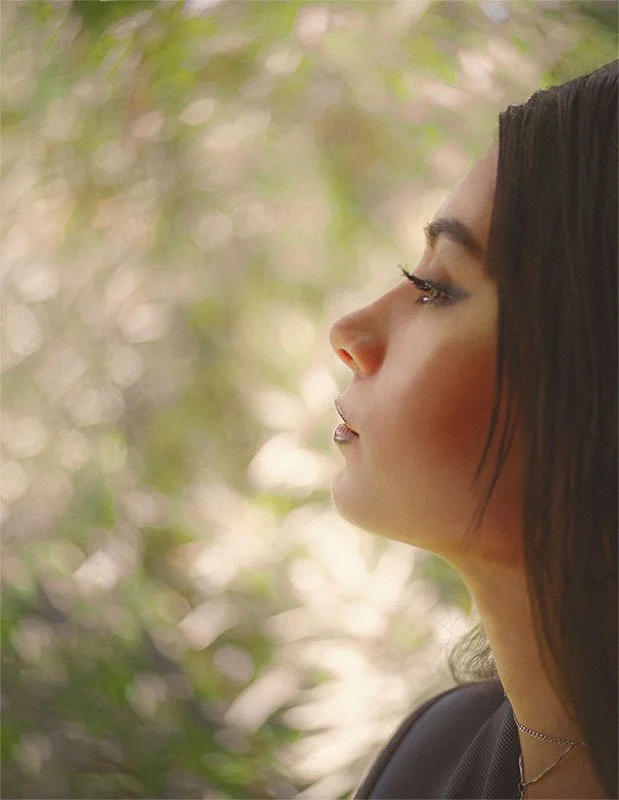
Beatrice in Nature; ph: Francesco Coppola
Sally Mann enters by right in this twilight of artistic nude photography genre with all the controversies she had to face when she published and exposed the photos of her three naked children, from the moment of birth to around the pre adolescence age.
It is not that she had visits from police, or the FBI or that she had to defend her artwork in some court, nothing of that. It has been the usual suspects: religious radicals and people with some heavy bag of growing up in an abusive family that protested and made some noise.
The accusation was and we contemporary cannot be surprised by that, due too by the controversy involving in these very ideas the new Capcom videogame “Pragmata”, that is receiving the same old accusation: exposing the naked body, even if in part, of a 6-year-old girl exposes it to attract the toxic attention of pedophiles.
Not denying that such disturbed group of people exists and that if they see such images they will react not with tender admiration, but with predatory hunger, the fundamental problem with such argumentation is that if the printed (or rendered) images does not display erotic poses or attitudes, situations or who knows what else, they and their authors are not guilty and should not be censored.
After all, the attention of this Photographer moved away from her children when they were more grown up, and yes, portraying them near adulthood naked, could have sparked more of a problem. Then, she focused on landscapes and dead bodies, touching even racial issues of her region with those close nude portraits of people of color or even photographing the decadence of her husband’s body afflicted by muscular dystrophy syndrome.
Watching the whole of her production is not an easy task, we delve into some gruesome views, before re emerging to strict close up of her young children again. That is, properly, what an artist does: she or he focuses on realities with a constancy and an objective sincerity that others or don’t have time to delve into much, or prefer openly to ignore in an act of self-preservation.
Not for nothing that in the later years of her career she achieved a full artistic recognition with her MoMa presence and the art medals she obtained, despite all the criticism she encountered during the whole of her artistic journey.
She is an example, between others, and one of the latest successful efforts to bring back the photographic medium as a legit form of proper fine art.
Shine on!