
Transitional authors 2: Bill Brandt
Biography
Meet Hermann Wilhelm Brandt, born in Hamburg Germany in 1904, and meet Bill Brandt the iconic British photographer that after WWII engaged in various surrealist art nude shootings – his personally preferred images.
Son from a British father and a German mother, his family knew hardship during the first global conflict. Then he caught tuberculosis and had to spend much of his young years in a sanatorium in Davos, Switzerland. Then he moved to Vienna to receive a psychoanalyst treatment and ended under the philanthropist wing of Eugenie Schwarzwald in which he had to own, or at least use some not more identified camera, with which he took a portrait of a visiting Ezra Pound, who was so well impressed with the boy’s photo that he introduced him to Man Ray in his studio at Paris in 1930.
Three years later he moved to London, disowning his German origin and became fully Bill Brandt. There he started working on producing photojournalist documentation of social condition of English society, from the poorest working class to the elites of his time. During WWII he documented too the surviving condition of people recovering from the bombing in underground passages, always with a humanist a respectful eye.
BBC Interview of Photographer Bill Brandt in 1983.
The end of the last global conflict signed the start of return to Surrealist formation in the 30s, but he worked on commission to produce many celebrity portraits and very appreciated from him are his industrial and natural landscapes.
He died in 1983 as an accomplished and celebrated Photographer in England, after long years in which he said to have been born in southern London.
His nudes with a certain perspective
As above said: after the end of Second World War he started playing with different tools, experimenting with various cameras, notably using a wide-angle lens Kodak camera that would become central to his signature distorted aesthetic while shooting indoor or outdoor nudes, full body or particular parts of the body, always seeking something more than the straight representation of woman’s beauty, not that much interested in details, because even in darkroom, when working with a well lit negative, he developed it according to his artistic needs, very often exaggerated the contrast, losing this way details and, including shadows and grain, giving the image a painterly Black and White look.
Perspective work from Bill Brandt commented by youtube photographer Alfredoddarke
His women are – anyway – a part of the ecosystem, though they are an emotional mystery, from tiptoe to portrait expression.
Brandt in his age and nowadays, what brings his approach to contemporary photo authors?
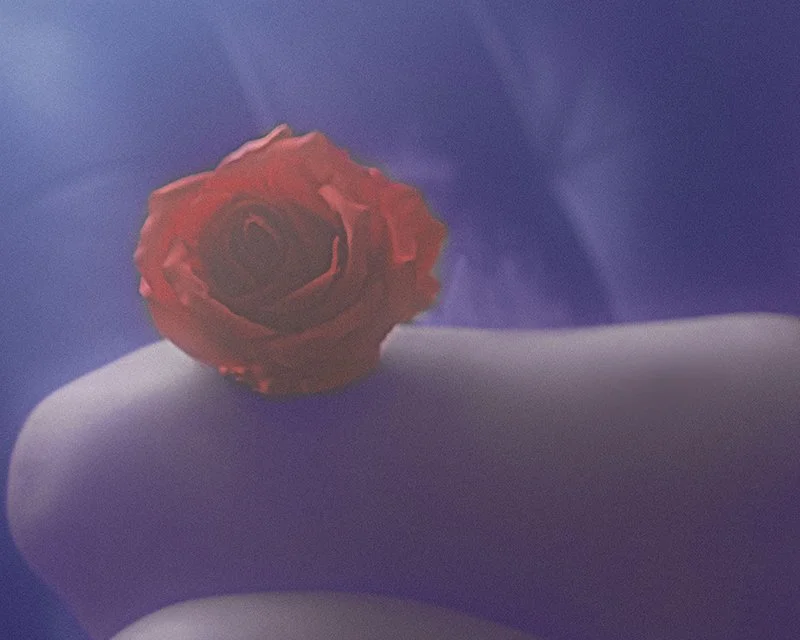
Image from a modelsharing event of Surrealist inspiration; ph Francesco Coppola
It is very intriguing the life and works of Bill Brandt considering the time he lived and his difference with other contemporary Art Photographers we have already treated here, mainly Lucien Clergue and Edward Weston.
The meeting and, presumably, what he learned during his 3 years in Paris visiting Man Ray’s studio is a crucial element that explain possibly the differences with the others.
For all of these 3 photo artists the tools at disposal were increasingly capable of fidelity portraying the natural reality, even if yet a weak tool in low light situations, a situation where Brandt – maybe after his long years of photojournalism work – decided not to be bothered with and use shadows and grain that other photographers in his period started considering weakness and that he instead used as expression, narrative, tools.
And that is, after, all his legacy, the heritage offered for all the ones, even today, are capable of hearing his voice:
Photography is not a sport, it has no rule: you don’t shoot for a competition, but to express yourself, the rules are there to be broken if it is needed.
Don’t focus on Image Quality: shadow and grain are tools to say things, not limits.
See the subject: don’t force it to be a picture of this or that, in time it will reveal itself.
Personally, even if I can surely abstract my models, my ideal BW is the possible (yet difficult to obtain) infinite sequences of tonalities, instead of a chiaroscuro approach. But it is ok, each and every one of us must try our own distinctive look. Copy others can be a tribute, an exercise, surely not a career direction, not an artistic one at least.
That is it for today.
Shine on!
Per aspera ad astra.