
Notes from a practice – Why the female nude body?
Foreword
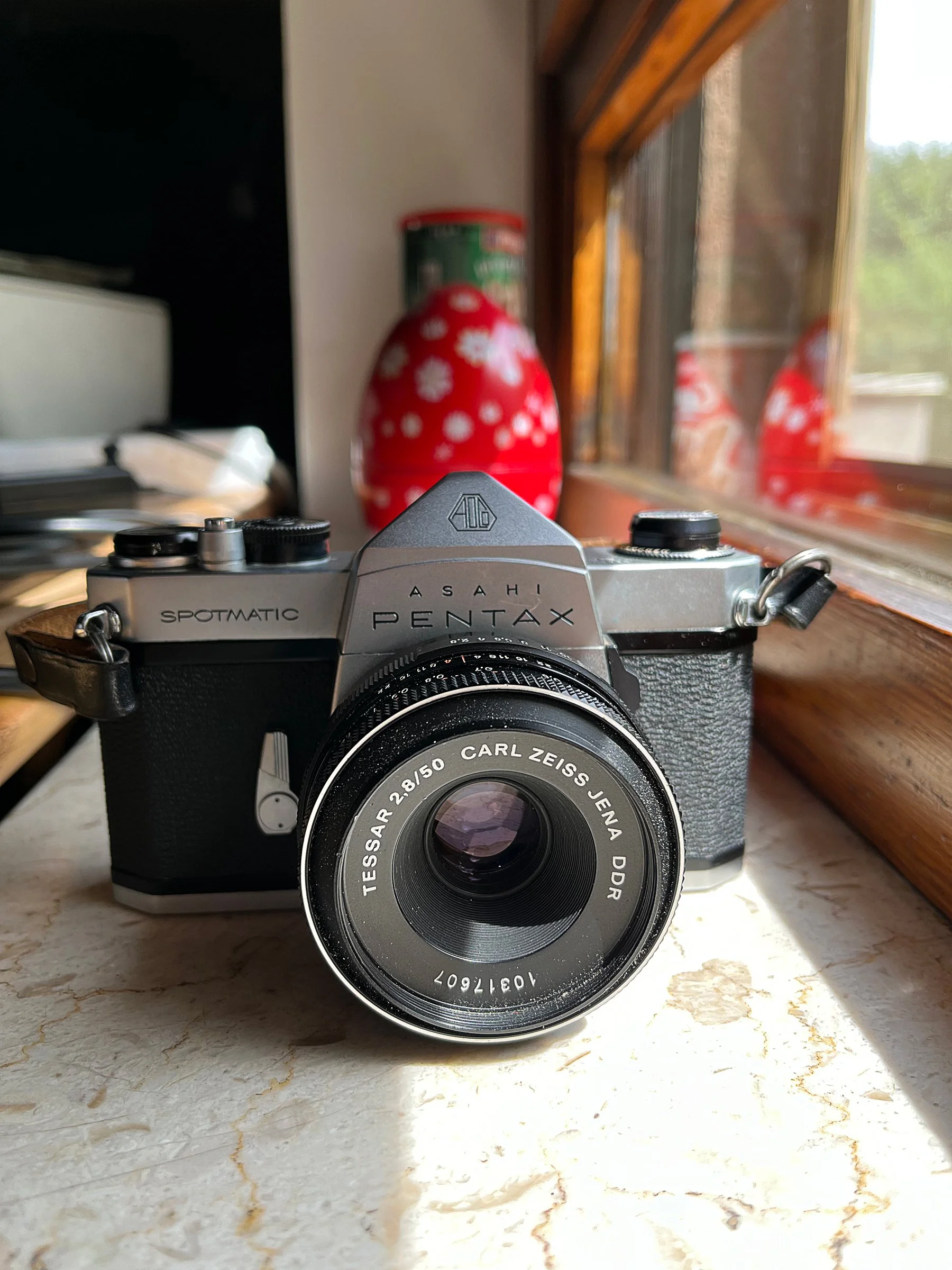
Pentax Spotmatic and Carl Zeiss Jena DDR; ph: Francesco Coppola
This is a crucial topic for my artistic career, because so many people practice this genre and many of them are bad actors that use women's beauty for NSFW intent, in search most probably of quick and easy money. The problem is that even those who are in the same genre and don't fall for easy tricks still continue to produce mostly pretty, figurative and sexy imagery. Thus, the general perception of this genre suffers from the sheer quantity of images of these types that circulate around the web.
Serious photographers of this delicate genre suffer under many aspects from this situation. One problem I personally faced last year was that images I made during my path into the artistic nude genre had been stolen and shared in those gray area forums on the internet where stolen images of models and other women were shared for low-grade usage. Another problem is the damage Instagram has done to photography broadly. The combined effect has pushed the perceived value of artistic nude images well below that of paintings in the same genre.
Nude images from a sapiosexual
The whole history of my life, with all its difficulties, forged my mind into a sapiosexual one. Never has a woman getting naked in front of me been enough to provoke a sexual reaction from me. This is why all the models who went naked in front of me never had problems with me: they saw me focusing on light, framing and the technical aspects of image making, rather than making stupid remarks or getting too touchy. When the situation calls for it, I share something of my own emotional world with them, to help bring us both into the mood I want to express.
I am aware of semi-mythical figures among photographers who seek extreme satisfaction from touching a model's skin under some excuse: moving a strand of hair, perhaps, or adjusting a pose. I am not that kind of miserable person.
The expressivity of the body
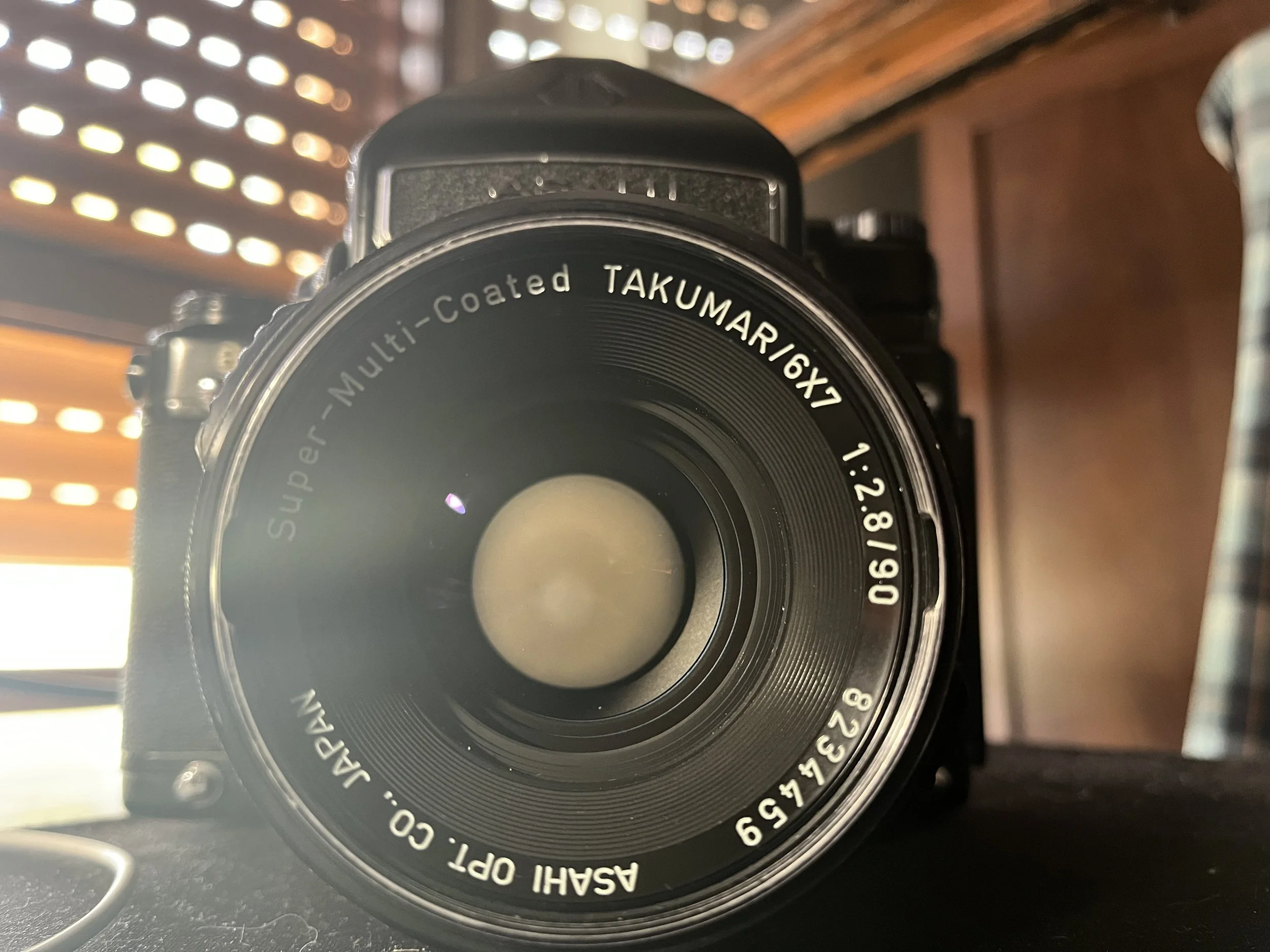
Pentax 6×7 and Super Multi Coated Takumar 6×7 90mm f 2.8; ph: Francesco Coppola
With most other types of portraiture, the focus of the photographer gravitates around the eyes and facial expression of the subject. Fashion, celebrities, concert and street photography are all anchored to this focal point.
Artistic nude images, instead, have much more to choose from, if approached narratively rather than simply sexually. The hands, the mouth, the legs, the thighs, the belly, the back, the breast, ankles, feet or the fruit of passion, they all possess a range of symbolic significance and narrative suggestion. And this is only within figurative work: if one moves toward abstraction, the choices multiply further still.
The weight of the concepts to express
My personal life history brings me to express feelings of exclusion, desire, frailty, loss, if not glory and sensual abandonment. My associative intelligence, though, brings other things to the surface: the reality of relationships in these contemporary days, the ongoing cultural conversation around gender, society's hostility toward couples and family formation.
Too often, love unions last for the duration of one or a few seasons. Once, marriage was the only way for a woman to leave her parents' home, and there was a heavy stigma for women who had not married by thirty. Society tended to grant more credit to fathers and mothers than to singles and in Italy, I can assure you, this persists even today. Women once had far fewer opportunities in education and work.
All this brings us to the present, where the situation has greatly changed and marriage is no longer the only path for a woman to realise herself. Add to this the scarcity and precariousness of employment that young people face, and we arrive at the fragility of relationships, misunderstandings between couples, and the growth of domestic violence. These conditions, and the psychological pressures that run beneath them, are of deep interest to me. That is why I cannot surrender to static, figurative imagery. That is also why I feel the urgent need to return to a more Surrealistic approach to the image of women.
That is also why the shooting techniques I apply in my practice are more than a stilistic choice, each one is a way of making visible what sharp, static imagery cannot hold. Filtering the image through a shoot-through technique, using a fiber optic brush to light paint the model's body, or using intentional camera movement during the shoot. All of these help me describe the irregularity of relationships, the differences in how men and women approach love, why break-ups happen, and how feelings of loss, sadness, loneliness and desire can be made visible. Not to mention that a less defined image requires far less post-processing, preserving as much as possible the original quality of what was captured.
Being part of a long history of artistic image making
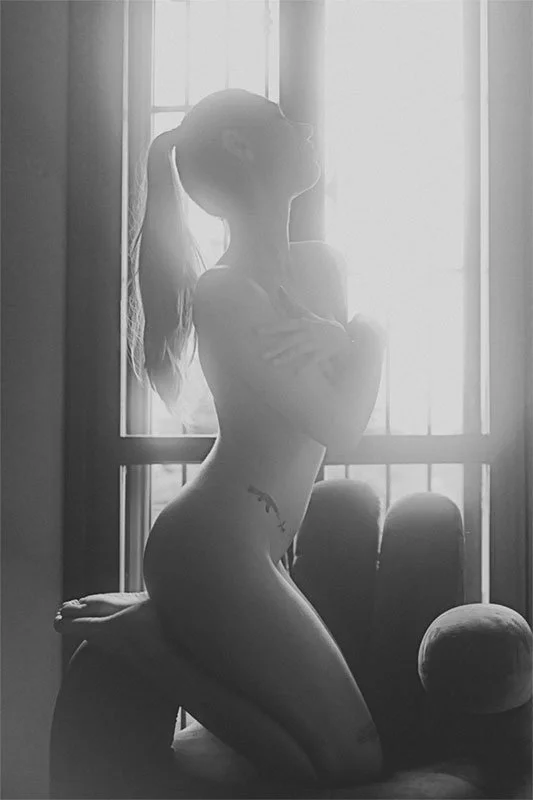
Present absence; ph: Francesco Coppola
Contrary to what the marketing from major camera brands might suggest, knowing and positioning oneself within the history of artistic nude photography matters. One can learn from and be inspired by the masters of the past, not only for their looks and techniques, but for why they photographed what they did and how their careers developed along vastly different trajectories.
In the art world, this kind of awareness is appreciated. Selling artwork is mostly about establishing relationships with the right people, and knowing the history of your medium and genre, knowing who you admire and who leaves you cold, is a good way to begin and sustain those conversations. Together with publications, exhibitions and prizes, this helps build the credibility of one's own artistic brand.
In conclusion
I am, and those who engage seriously in artistic nude photography are, seekers of looks, expressivity and meaning. Things shaped by the time and geography of each practitioner.
That is why I don't believe there is any real fear of competition. We are, by necessity, different, with different focuses, different intentions, different things to say.
What matters is not taking easy shortcuts. This is an age of authenticity, after all.
I cannot claim, and will not pretend, that my approach is already fruitful. I am not an established artist yet; I don't have a single print sold. I speak from the point of view of a developing practitioner and from this point of view I can only salute you with my
Shine on!